
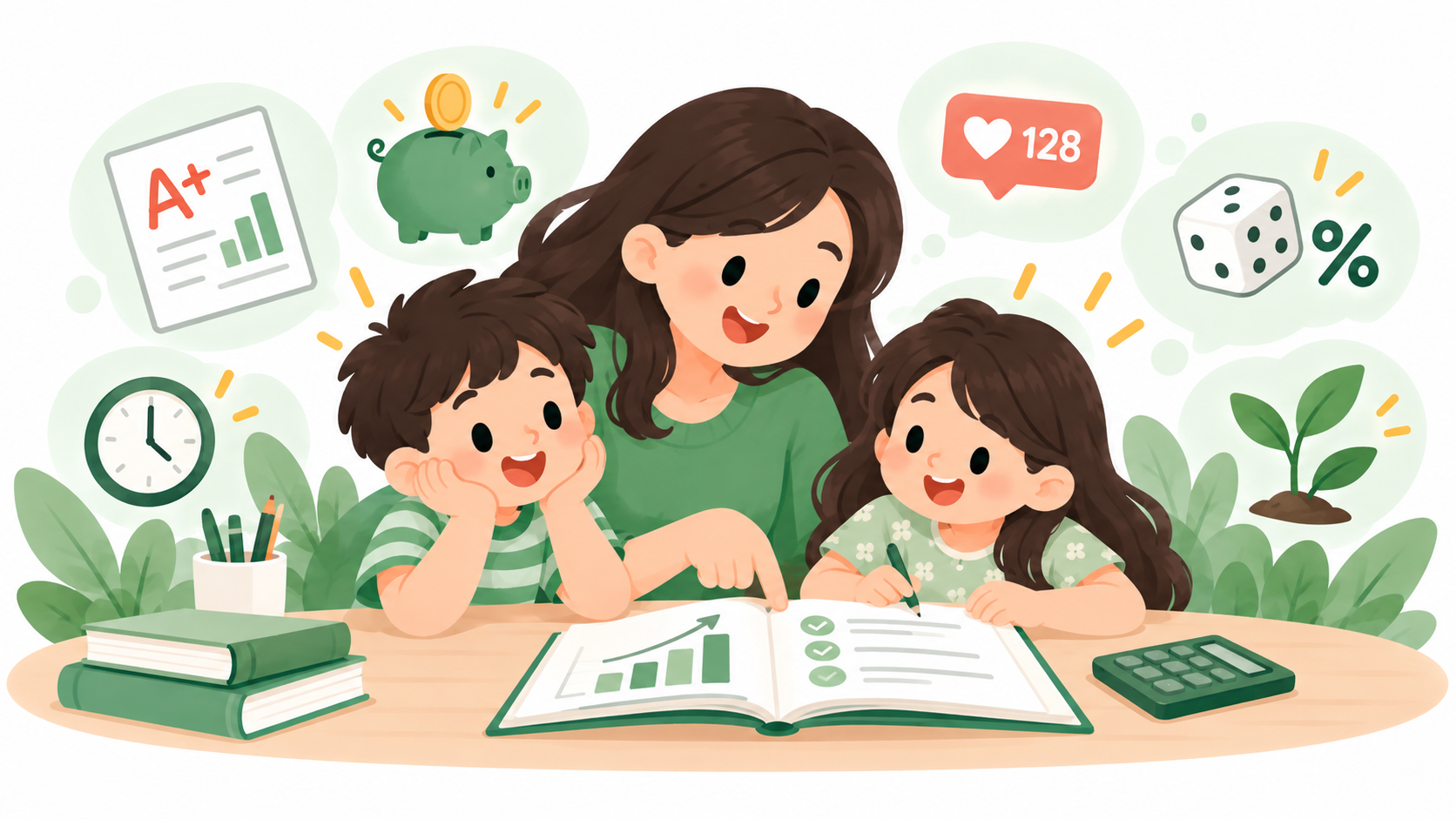
Teaching kids about numbers is about much more than teaching arithmetic. Children need to understand what Numbers represent, how to use them in real life, and how to prevent grades, scores, rankings, follower counts and other metrics from becoming measures of their Self-worth. In I Grow Younger, we call this skill Handling numbers, part of Intuition about quantities. Please consider this chapter as an integral part of the IGY for parents framework.
What numbers can – and cannot – tell a child
It’s to understand the abstraction, to understand what they represent and what the context is.
| Number | It can tell us | It cannot tell us |
|---|---|---|
| Grade | Performance on a particular task | Intelligence or Self-worth |
| Score | How many answers were correct | Understanding, Curiosity, or Human potential |
| Price | What something costs | Its human, emotional, or personal value |
| Followers | The size of an audience | Friendship, Love, or how much people care |
| Ranking | Relative performance in one competition or group | Overall ability or future potential |
| Money | Available financial Resources | Success, Happiness, or value as a person |
| Age | Time since birth | Exact maturity, readiness, or competence |
| Probability | How likely an outcome is estimated to be | What will definitely happen |
In IGY we deliberately use “Don’ts” to point out traps that are easy to fall into. If we say “Don’t” we restrict you only to one option and keep all other options open. And there are millions of them.
Don’t ignore the numbers that shape your child’s life
Numbers govern the modern world like no other and are of critical importance.
So it will be completely useless, if you try to solve number obsession or fear of numbers by teaching children to ignore them. Numbers are everywhere and kids will have to encounter them sooner or later, because in some situations they will simply not have the opportunity to avoid them.
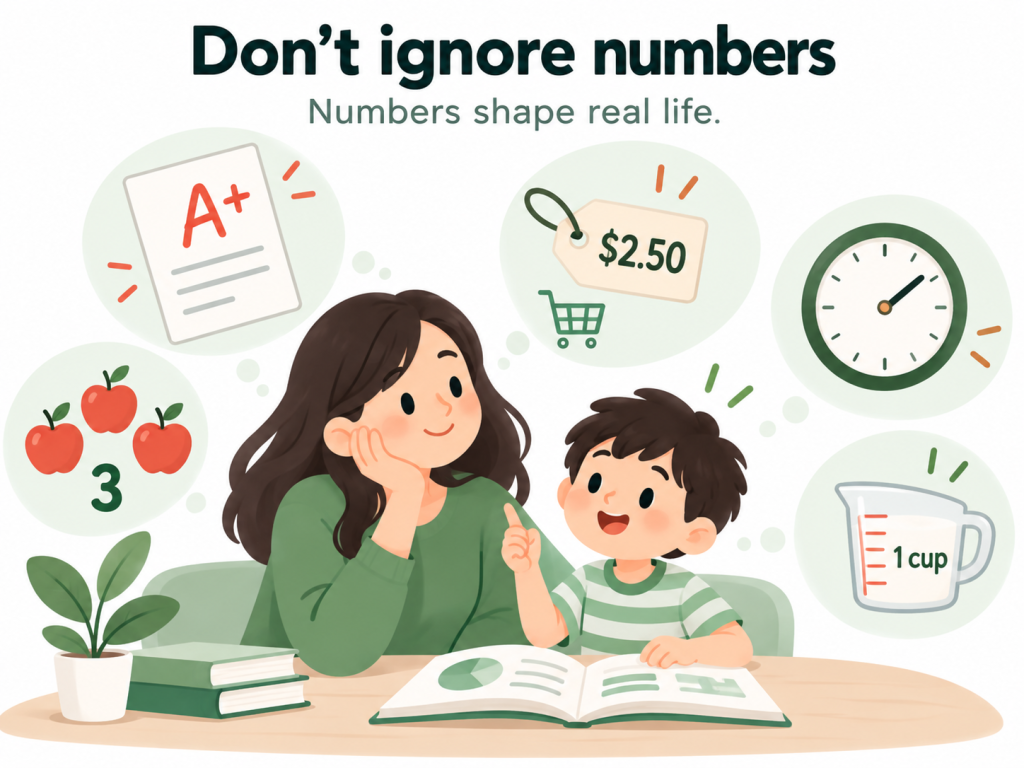
Money, Time, probabilities, prices, distances, interest rates, budgets and data are only some examples of numbers and they all matter a lot in the Game of Life. So a better strategy will be to foster the interest in numbers from an early age than just to ignore them.
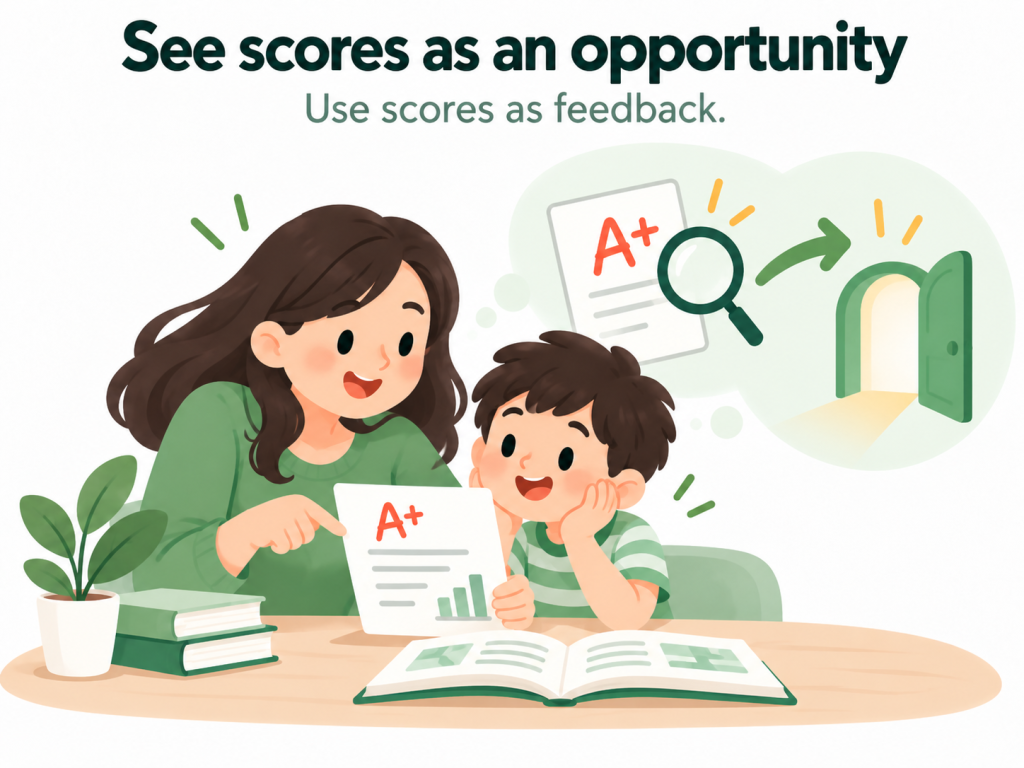
Don’t see scores emotionally – they are information and an opportunity to learn
Truth deserves Love by itself. And numbers are part of the Truth. So dig in.
Life in general and School in particular give parents an enormous opportunity to strengthen a child’s relationship with numbers. If a child comes home with 68%, the parent often asks straight and without thinking about:
“Why only 68?”
Thus the number turns immediately into an emotion and the kid feels that the parents are disappointed.
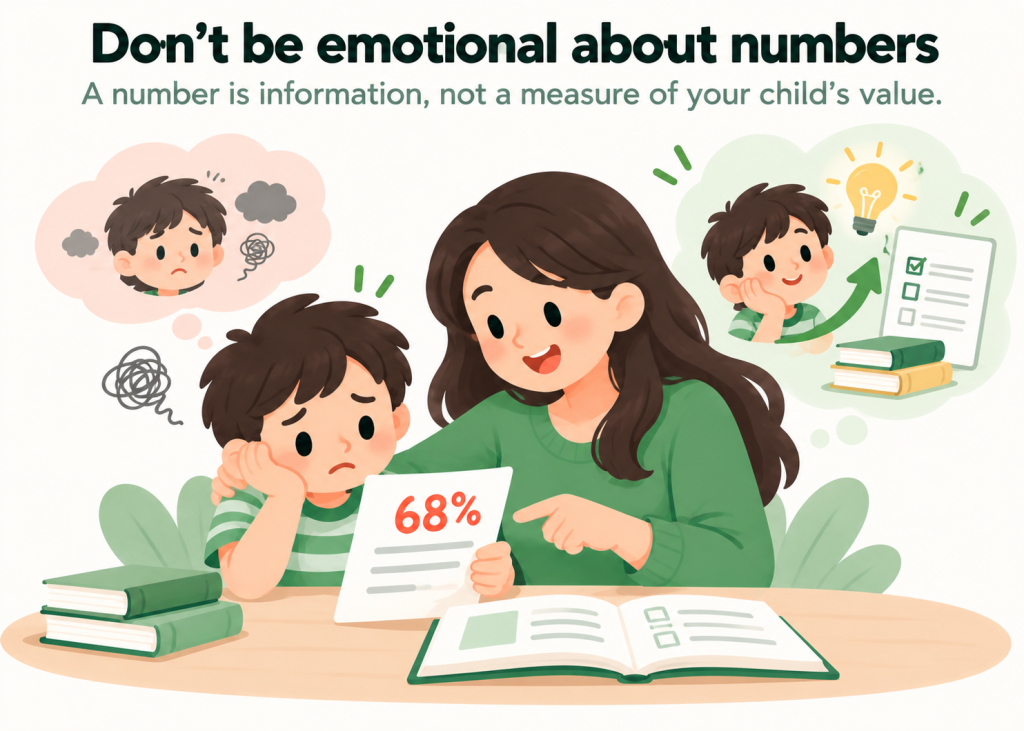
A much better reaction is to say:
“Let’s see what the 68 is telling us.”
Now the number has become again only an useful piece of information and can be analysed together. We may find out that the child understands fractions but not percentages or that they ran out of time. Or that they misunderstood the instructions, made careless mistakes or the test was simply too difficult.
It is important whether the child understands, has Curiosity, discovers their strengths, encounters difficulties, develops Intuition or learns how to learn. The grade is only feedback that should be used wisely.
And if we want, we can even choose a school that gives not only numerical feedback, but also a detailed report about the student’s progress. This means that the teachers also observe and analyse carefully the Learning process. There are school systems, like the Waldorf schools, that do not have grades up to the age of 14 or even 16.
Don’t let grades define your child
Thus a very good grade can be just as dangerous as a low one, because all numbers can create Boxes. If a child always has the best result and his family celebrates every score, they obtain status and one day, when they are not top anymore, they may experience loss of identity and fear.
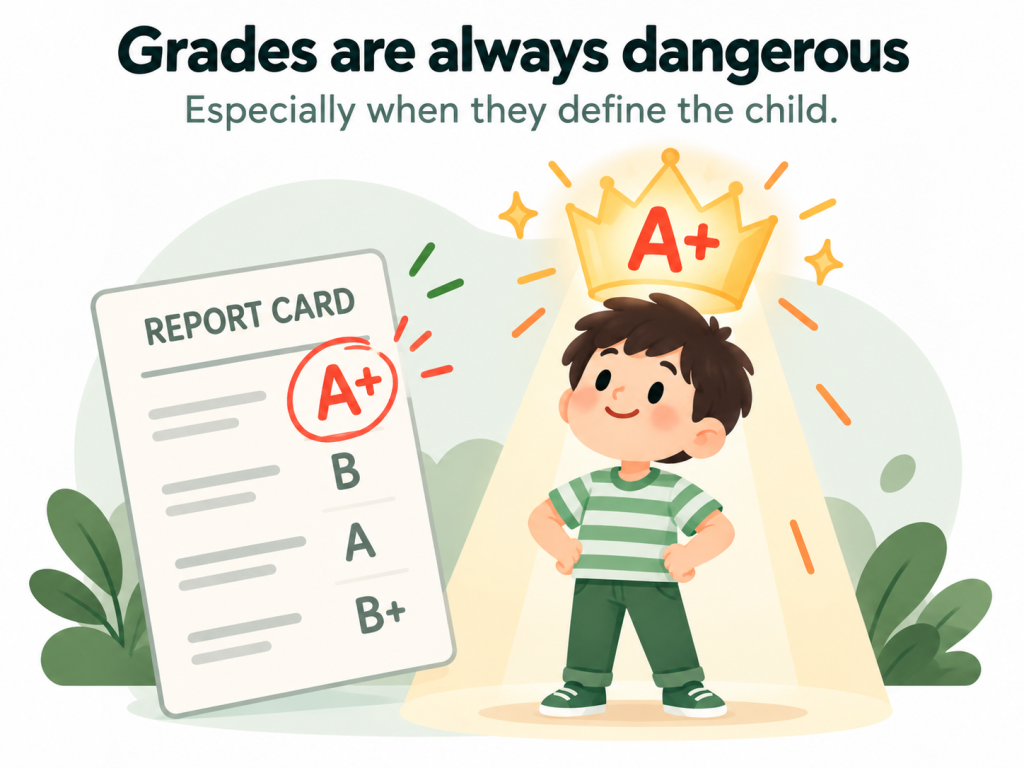
A 100% score can be enjoyed, but should not become part of the child’s worth. This connects strongly with the danger of Celebrating small wins. Celebrating small wins may interrupt the child’s Flow and momentum.
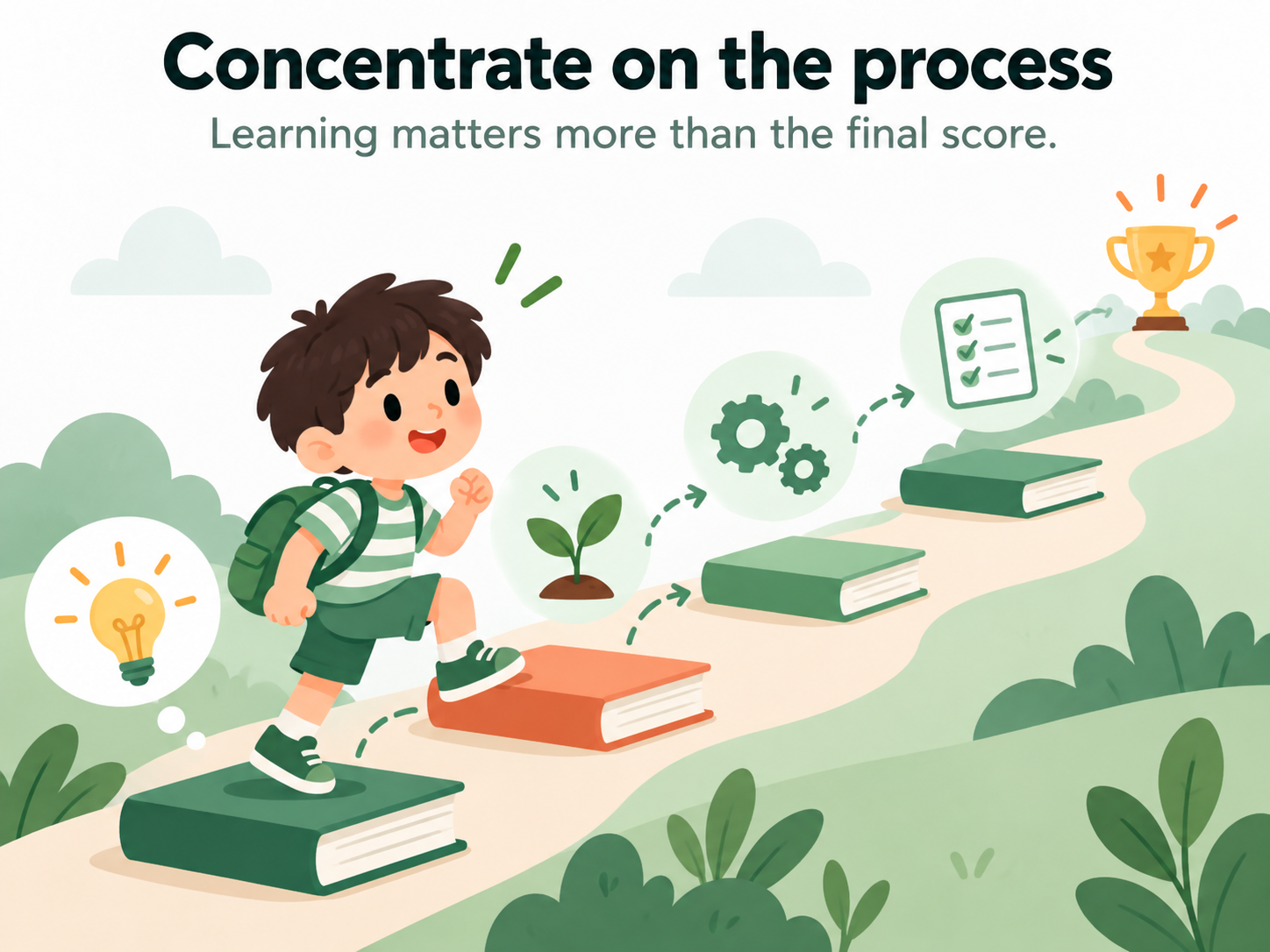
Don’t focus only on the final score, focus on learning
A final score is just a specific Achievement at a specific time moment, the real Added value is the Learning process itself and it should be ideally a Flow. That’s why we define Success as a process in time, a Flow in time. Even if parents don’t make the mistake to concentrate only on the final score, they sometimes move from:
“What grade did you get?”
to:
“How many hours did you study?”
and fall into another Trap – they replace one metric with another. But three hours of learning is not necessarily better than one; twenty mediocre books are not better than five really excellent ones; a hundred easy practice problems are not better training than twenty, starting from easy to hard.
We all should learn to state much better questions in our roles as parents:
“What did you understand after working on this?”
“Can you extract a knowledge or make some conclusions that will be useful for you also in future?”
“Where did you get stuck?”
“What changed between the beginning and the end of the learning process?”
“Was the way you studied actually useful?”
“What would you change next time in your learning process?”
“Do you have ideas how to make your learning process more interesting, funny and successful?”
Thus we connect numbers with Flows, added value, Structure, Truth, Intuition and Meaning and teach our children much more that just how to deal with numbers.
Don’t miss the chance to use real-life experience to teach children about numbers
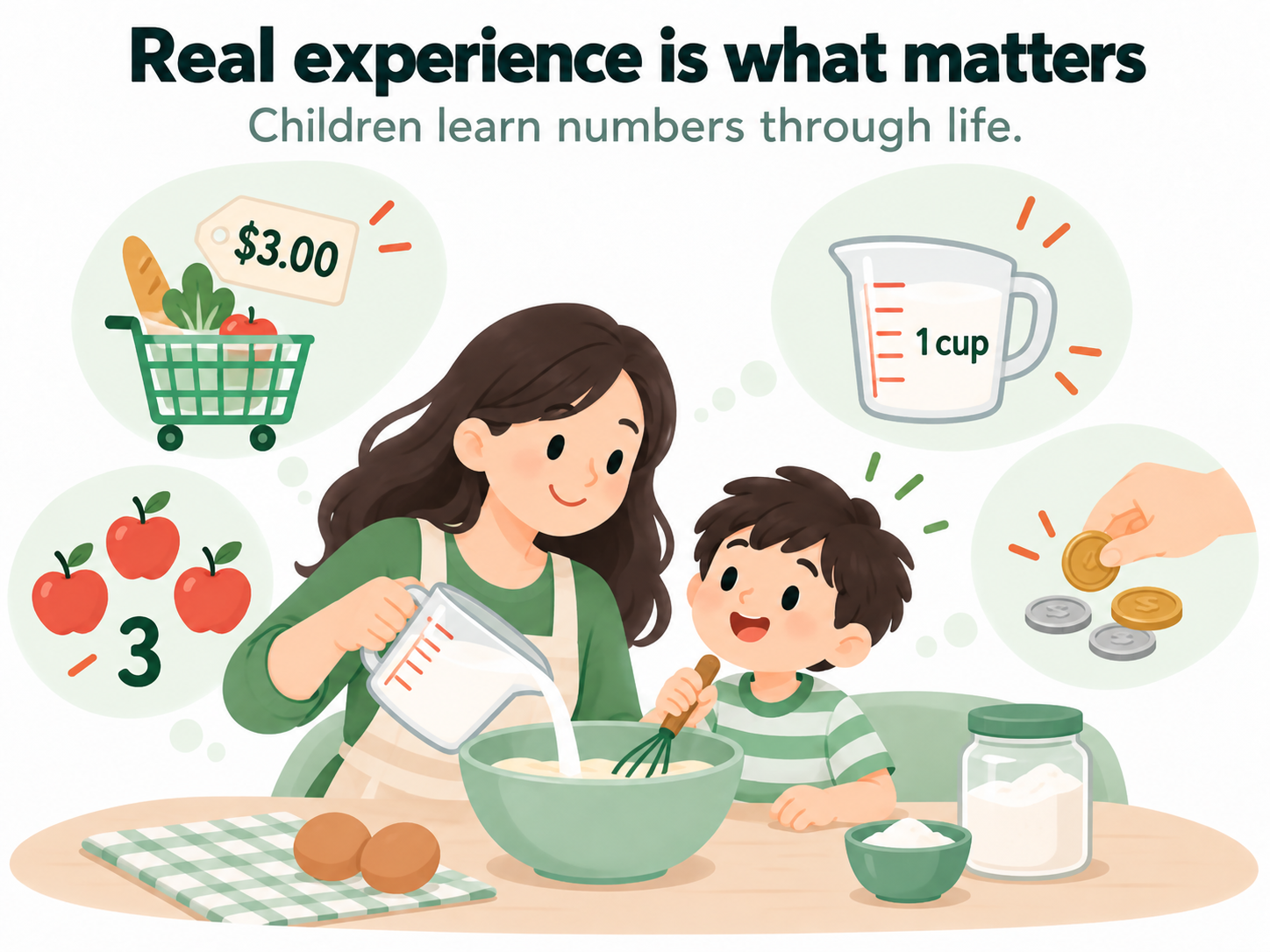
Parents should give children experience with real quantities – give them some Money and let them decide how to use it; ask how long they think a task will take before doing it, then compare the estimate with reality. When travelling, ask how far they think you have gone. When making a purchase, compare the price with alternatives. When discussing a risk, ask them how likely they think that actually is. When running to take the plane, ask the kids to guess what is the probability to catch the flight. A child’s Intuition improves when they repeatedly make an estimate, encounter reality, and adjust their internal model.
Don’t let numbers define how children see themselves
“Numbers belong in the mind. Feelings belong in the heart. Don’t mix them.”
Numbers simplify reality, so teach children to use them, but without becoming used by them.
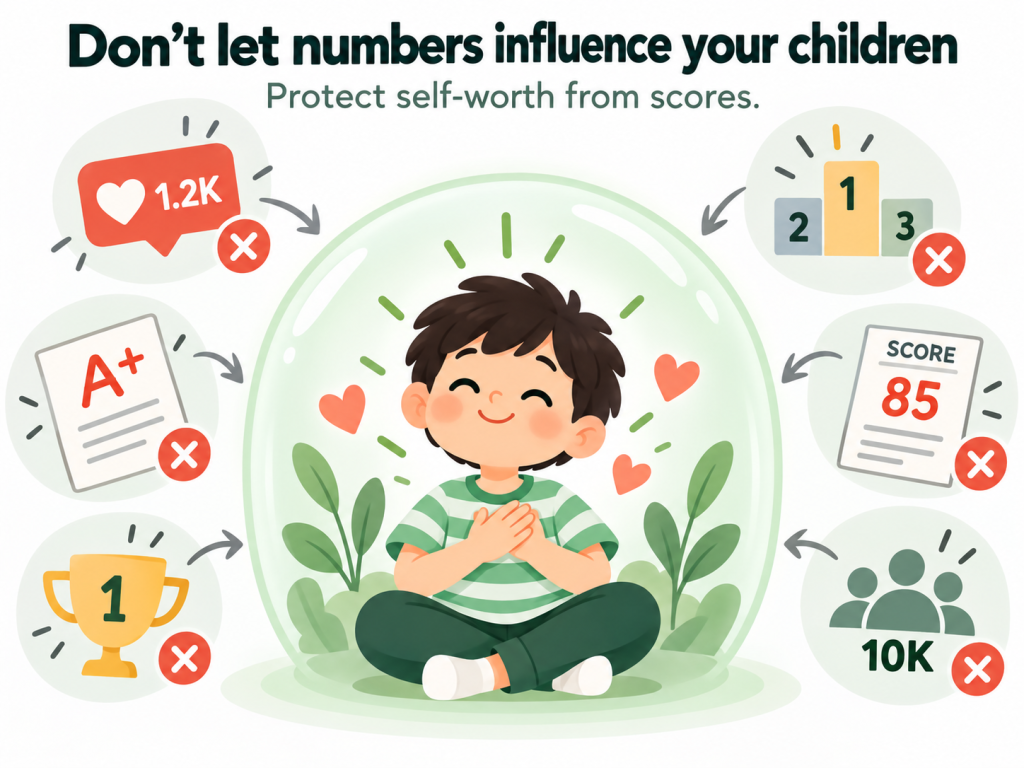
Imagine that a child receives an 8 out of 10 on a twenty pages test. All other information just disappears – what they misunderstood, how difficult the test was, whether they were tired or ill, what they actually learned, how much effort they invested and what they could improve next time. A number can compress a complicated reality so efficiently that we forget that the reality ever existed, but we need this reality in order to know what are our next steps and to make further progress.
Teach children that numbers are representations of reality
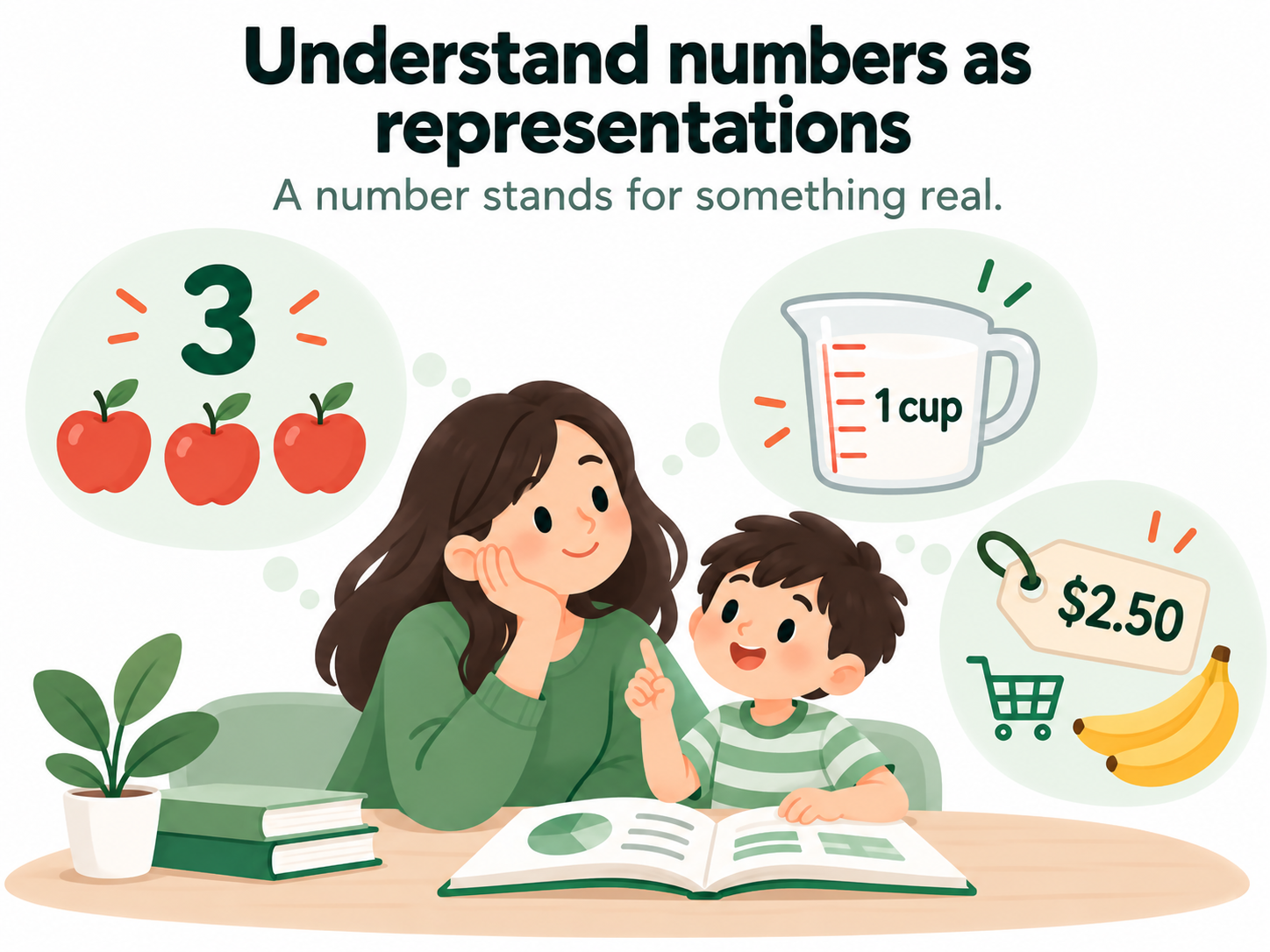
This is the first thing a parent should teach about numbers: A number is a representation of something. It is not the thing itself. A grade represents some aspect of performance under particular conditions. A bank balance represents an amount of money. A person’s age represents time since birth. A follower count represents the number of accounts that clicked a button. A test score represents performance on a particular test. None of these numbers contains the entire person or even the entire reality it supposedly describes. So whenever an important number appears, the first question should be:
“What exactly is this measuring?”
And the second:
“What is it not measuring?”
Those two questions alone could protect children from a remarkable amount of confusion.
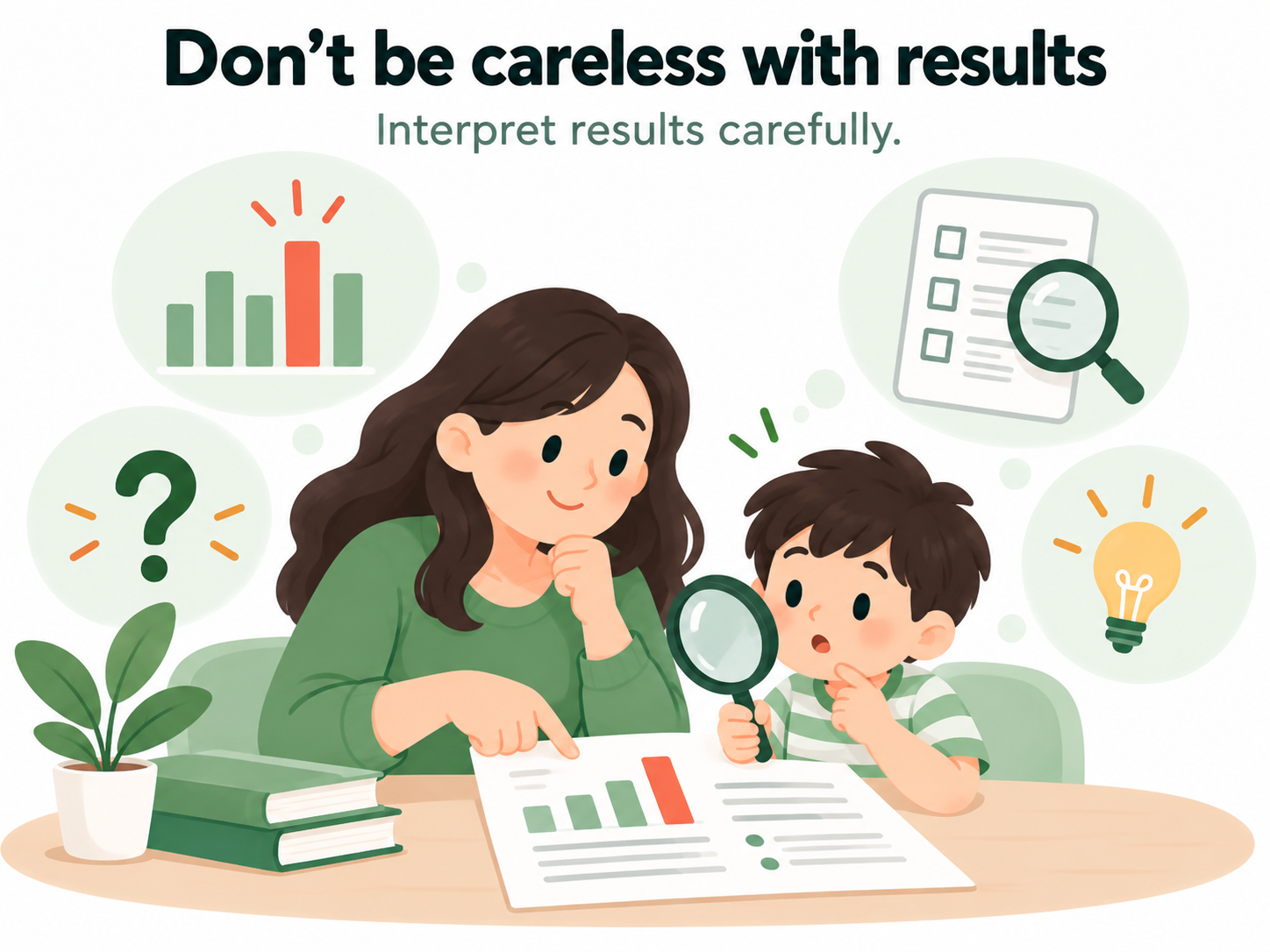
Look carefully at what a numerical result actually means
A measurement can quietly become an identity. This is probably the greatest parenting danger around numbers. A child starts with:
“I got 5 out of 10.”
Very easily, this becomes:
“I’m bad at maths.”
Then:
“I’m not smart.”
A number that originally described one result has crossed several conceptual boundaries until it is being used to describe the child’s identity.
The same thing can happen in the opposite direction:
“I always get 10/10.”
becomes:
“I’m the clever one.”
That sounds positive, but it can create another Box. Now a difficult test is not merely difficult. It threatens who the child believes they are. This is why IGY draws such a strong distinction between numbers that help us understand the Game of Life and numbers that begin to represent non-numerical things such as performance, status or Self-worth. Its warning is precisely that when a number becomes emotionally connected to Self-worth, the number is no longer functioning only as useful information. Keep the information. Remove the identity. The number may be real while the Meaning attached to it is completely false.
“You got 62%”
may be useful.
“You are a 62% student”
is not.
“You came fourth”
is information.
“You are not as good as those three children”
is an interpretation.
“You have 200 followers”
is a count.
“Only 200 people care about you”
is Bullshit.
Here we establish a strong connection between numbers, Truth and Meaning.
Don’t compare children through grades, scores or rankings
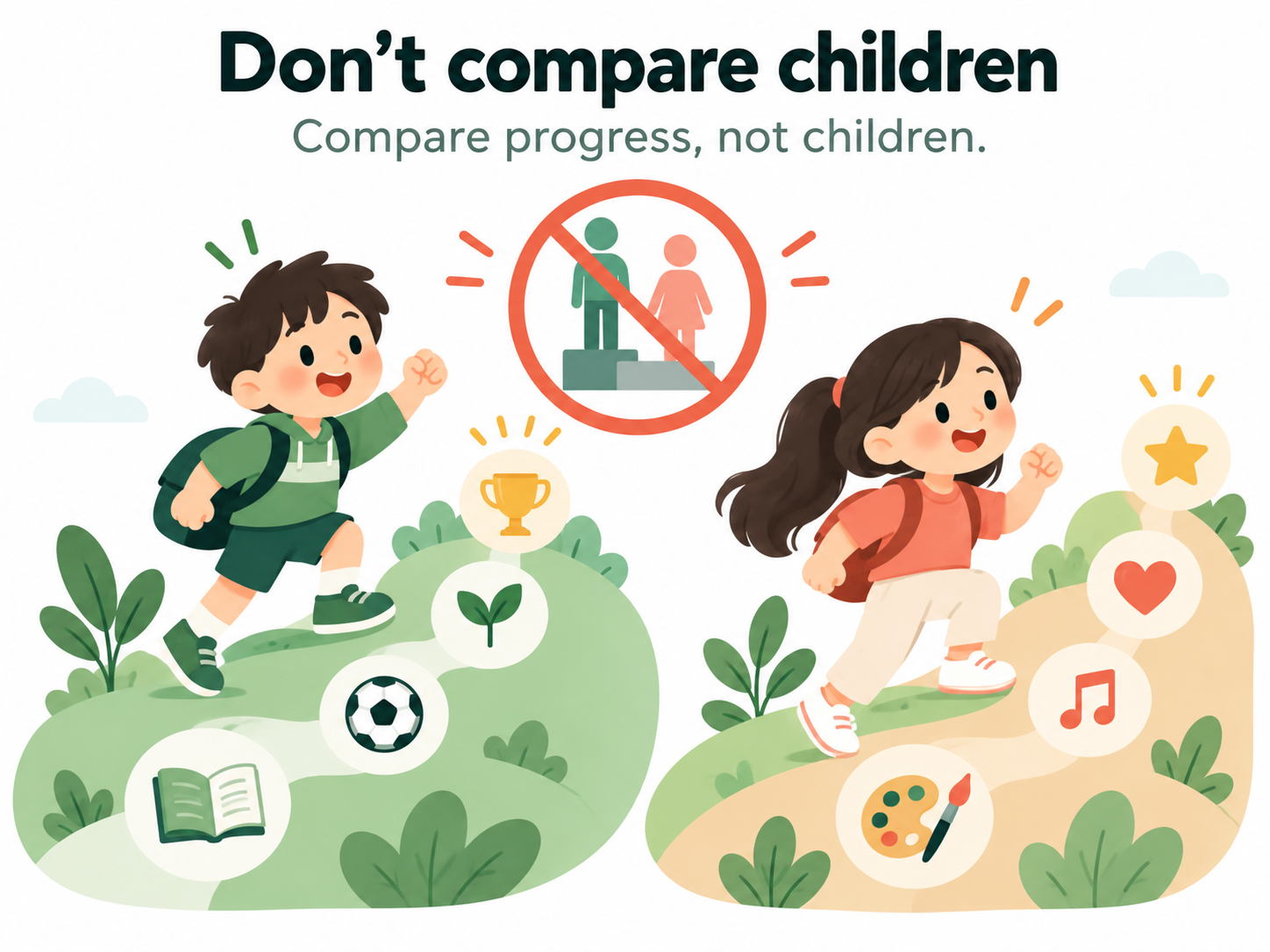
Numbers become particularly dangerous because they are easy to compare. Human qualities are messy. Who is kinder? Who is more creative? Who is a better friend? Who has more courage? Who understands themselves better? Those comparisons are not only impossible, but also completely unnecessary.
But numbers make comparison effortless. 95 is bigger than 87. 10,000 followers are more than 800. €100 is more than €20. First place is higher than fifth place. And because comparison is so easy, numerical environments can make a child compare themselves constantly even when the comparison is meaningless. IGY specifically identifies this ease of comparison as one reason numbers can become emotionally powerful and connect with Expectations, envy and lower Self-love.
This has become especially important for children growing up with digital platforms. Social media takes extraordinarily complicated human experiences – attention, friendship, popularity, beauty, influence, belonging – and attaches visible numbers to them. Views. Likes. Followers. Streaks. Shares. Scores. The child does not even need to decide to compare. The interface does it for them. And here we are back to the highest possible Risks – the Brain fragmenting distractions and above all – Social media and Phone notifications.
Imagine two children who post something they created. One thinks:
“I made something funny.”
The other thinks:
“It got only 23 likes.”
The second child has allowed a platform-generated number to replace the original experience. That is precisely the kind of transformation parents should notice. The relevant question is
“What do 23 likes actually mean?”
Not very much about the quality of the child, the quality of the creation, or its importance.
Don’t mistake numerical precision for Truth
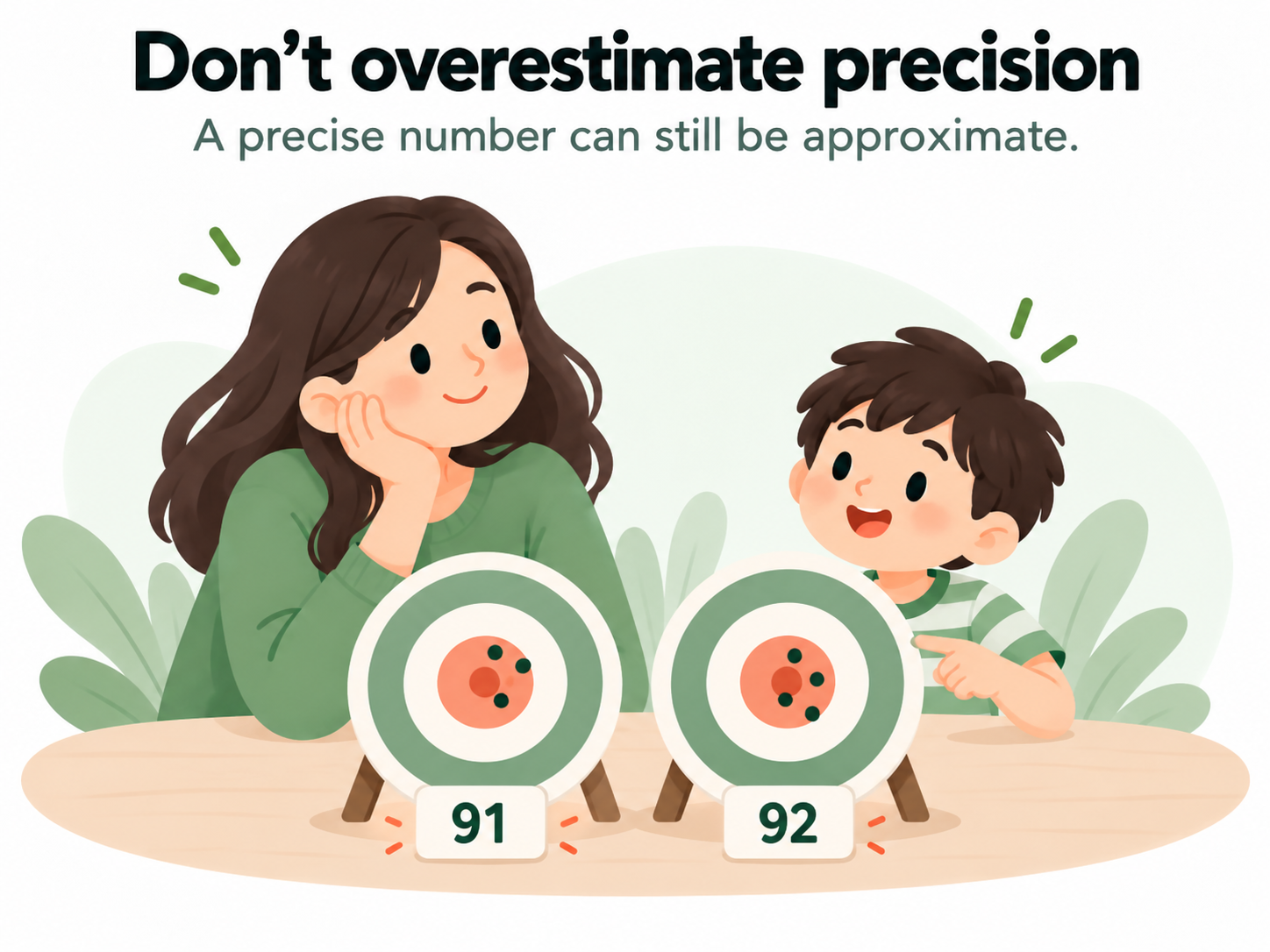
Be precise about quantities when precision improves understanding. Refuse false precision when the reality cannot actually be reduced to a number.
“About €50”
may be too vague when comparing two purchases.
“She’s 73% happy”
is meaningless pseudo-precision.
“There’s a 20% chance we’ll miss the train”
may help a decision.
“He’s a 6/10 friend”
probably does not. The mature mind learns where quantification clarifies reality and where it distorts it.
Don’t let numbers load you emotionally
The parent should model emotional independence from numbers. Children learn much of this without any lesson. They watch what happens when the parent sees: their bank balance, their weight, their salary, their age, their social-media statistics, their work results, their investments, their neighbour’s new car. If every number produces a large emotional reaction, the child learns: Numbers determine how adults feel about themselves. So modelling matters enormously. A parent can say:
“The bill is higher than expected. Let’s see why.”
“My result wasn’t what I hoped for. Let’s understand what happened.”
“I made less money this month. That’s information I need to act on, not a verdict on me.”
Don’t reduce core flows to scores
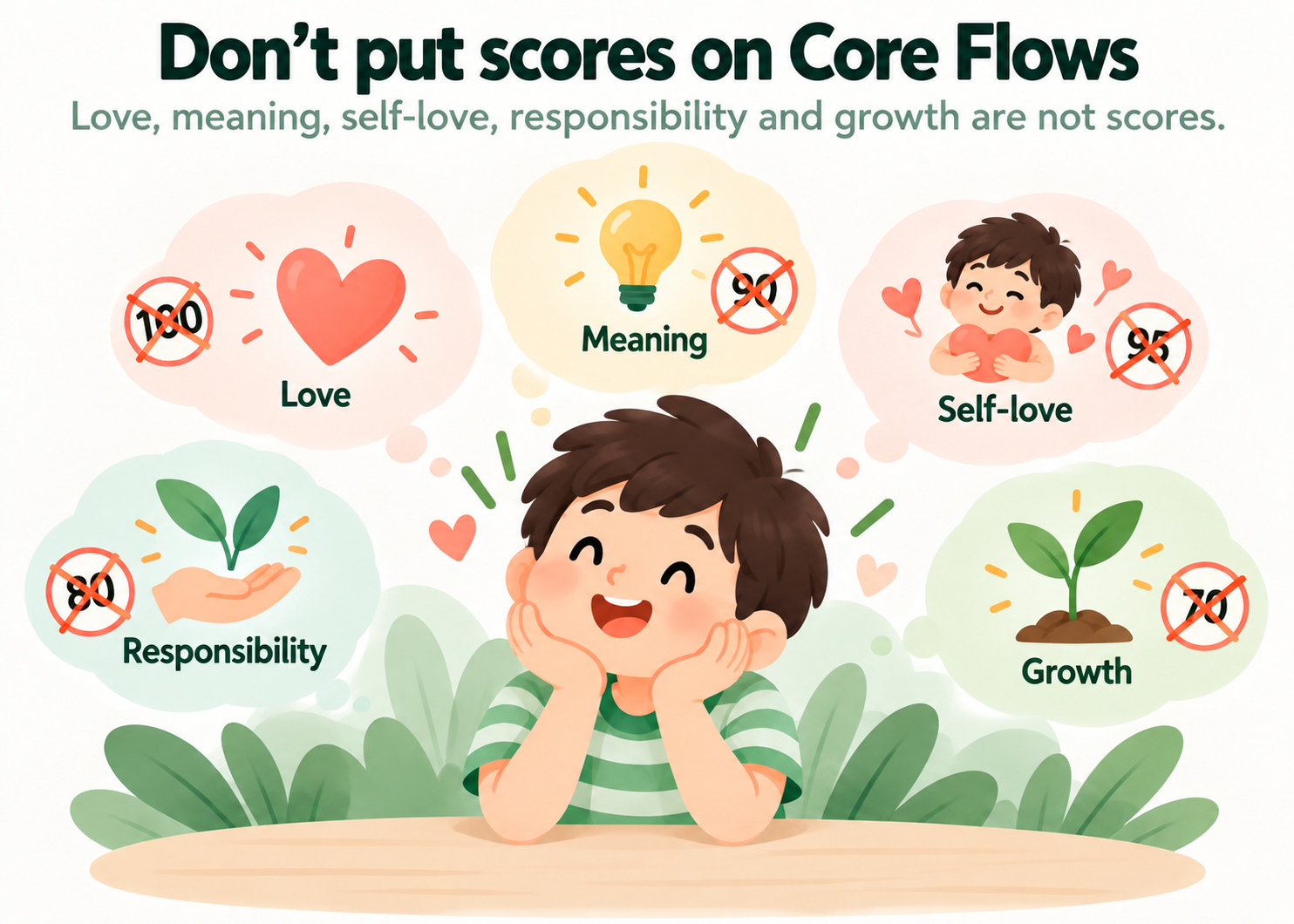
A child’s Core Flows should not be reduced to scores either. Flows can often be compared over time but cannot be measured in precise numbers. So parenting questions might be:
“Does she seem more curious than six months ago?”
“Is he taking more responsibility?”
“Does she recover from mistakes with greater Self-love?”
“Does he have more meaningful possibilities available to him?”
We can observe Direction without pretending to have precision we do not possess.
Don’t let metrics replace real observation of your child
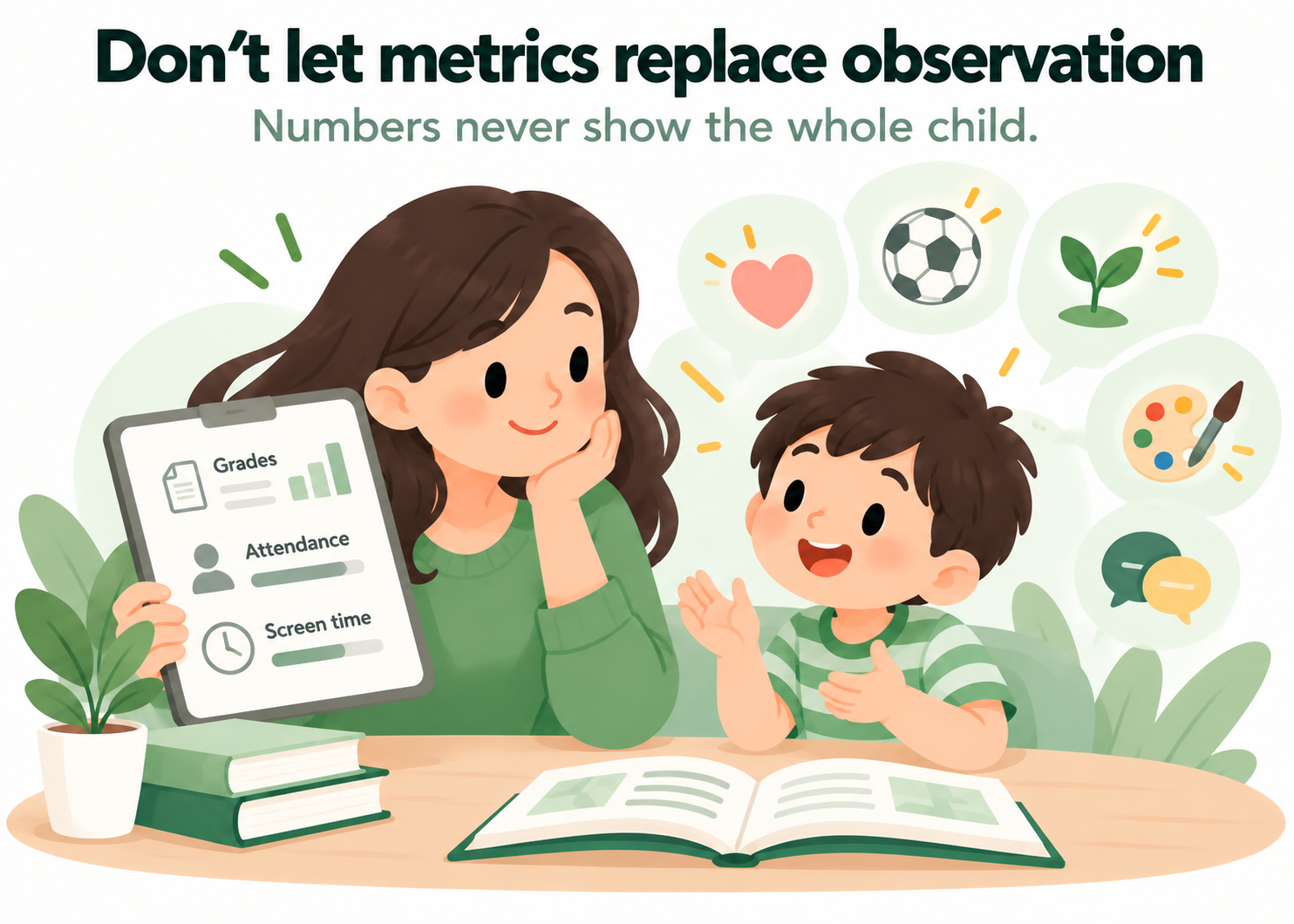
Modern parenting offers numbers everywhere. School portals. Developmental percentiles. Screen-time reports. Sports statistics. Sleep trackers. Health apps. Reading levels. Test scores. These tools can be useful. But every metric creates a temptation:
“If it is measured, it must be important.”
And even worse:
“If it is not measured, it must be less important.”
Yet some of the most important things in childhood resist precise measurement: Curiosity. Self-love. Meaning. Trust. Creativity. Compassion. Courage. Intuition. Freedom. A parent therefore needs a strong resistance to metric substitution: replacing a difficult qualitative question with an easy numerical one. Instead of asking:
“Is my child developing well?”
we look at grades. Because grades are available. Instead of:
“Does my child have meaningful friendships?”
we notice how many friends they have. Instead of:
“Is this activity enriching their life?”
we look at how many trophies they won. The number is easier. That does not make it better. Parents should be extremely careful when turning Love into numbers. There are also places where quantification should barely enter.
“How many times have I told you?”
“I did three things for you and you did nothing for me.”
“Your brother called me four times this week and you only called once.”
This turns relationships into accounting systems. Children can then begin to understand Love through balances: I owe you. You owe me. I did more. You did less. Of course cooperation requires fairness. But Love is not an Excel spreadsheet. If parents constantly quantify affection, sacrifice or gratitude, the child may begin to experience relationships transactionally. Parenting should protect some areas of life from unnecessary measurement. Not everything that matters becomes clearer when counted.
Here we establish a strong connection with the relationship and Love chapter.
Don’t let numbers mislead you
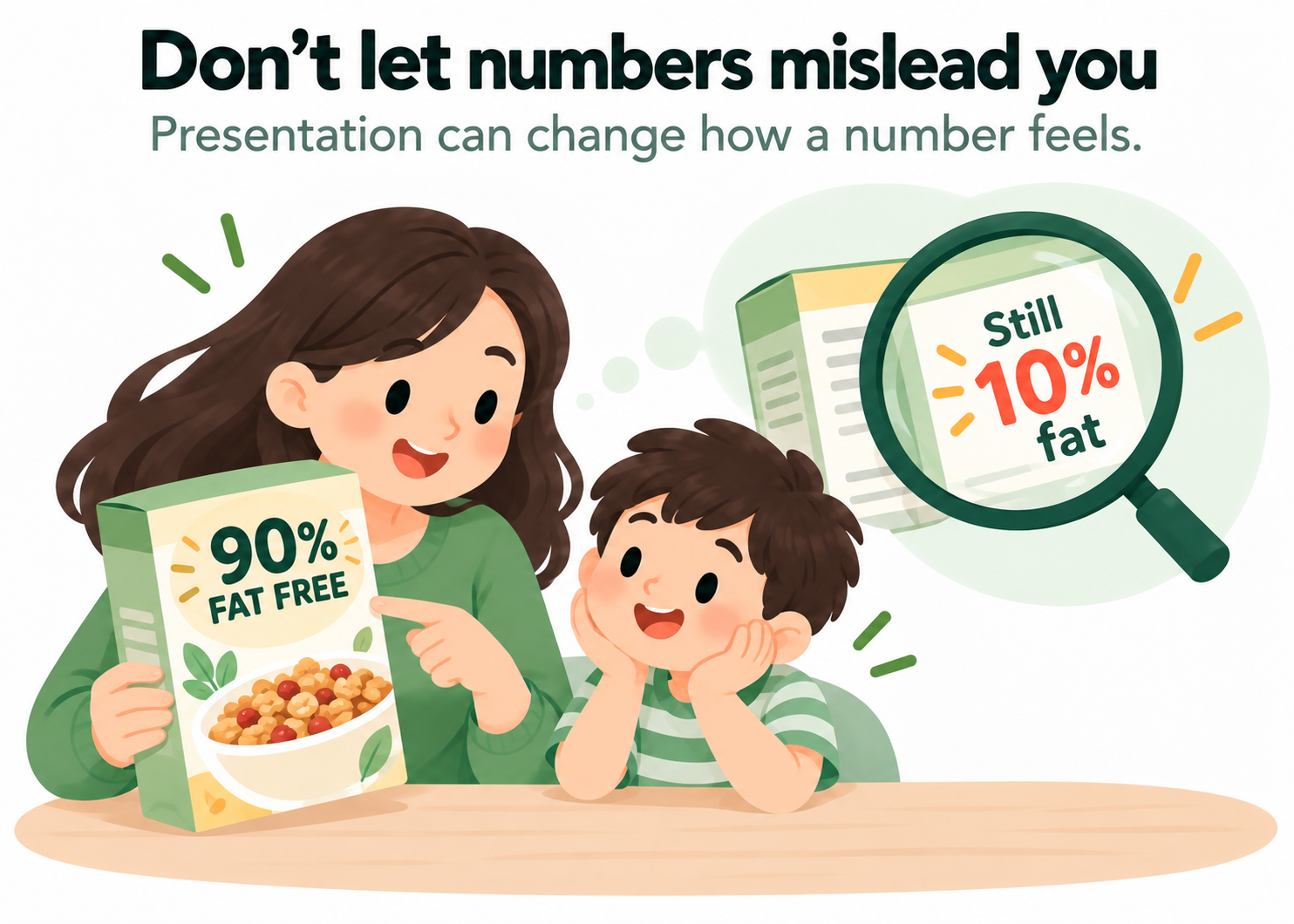
Children should also learn that numbers can create misleading shortcuts. €200 feels “better” than €50. Five stars feel “better” than four. Number one in a ranking feels objectively “best”. But the underlying reality may be much more complicated. A more expensive product can be worse for the child’s needs. A highly rated movie may bore them. The number-one University in a ranking may not be the best environment for a particular student. So whenever numbers produce automatic prestige, teach another question:
“Better according to what?”
That protects against a great deal of status thinking.
Don’t measure child’s progress or readiness with their age
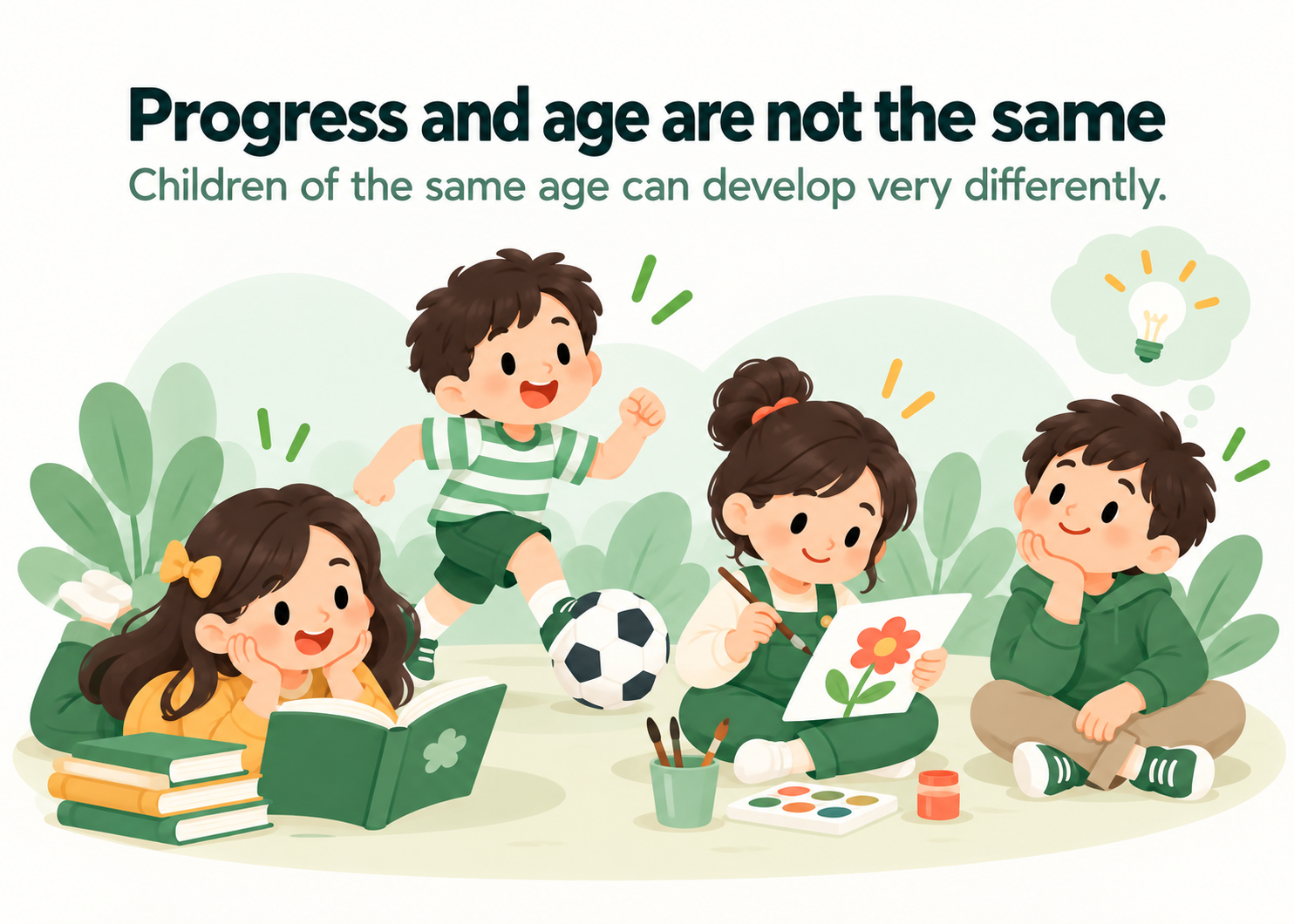
Age is a number too, so parents should be carefull not to compare child’s progress with some general data for a specific age or with other children at the same age. Every child is unique and develops with a different pace. Adults constantly use age as a proxy for capability:
“You’re eight, you should know this.”
“You’re twelve now.”
“At your age I already…”
“She’s younger than you and she can do it.”
Age is useful. Development obviously changes with time, but is specific for every child. Age does not perfectly measure: maturity, responsibility, emotional regulation, experience, judgment, courage, social ability or readiness for a particular Freedom. Two fourteen-year-olds can have very different competence thresholds. So age should guide decisions without replacing observation. Instead of:
“You’re sixteen, so you’re ready.”
ask:
“What have you shown me that suggests you’re ready?”
Age is a quantity. Readiness is a more complex structure.
That brings us to Thresholds.
Don’t forget to look for thresholds: when more becomes different
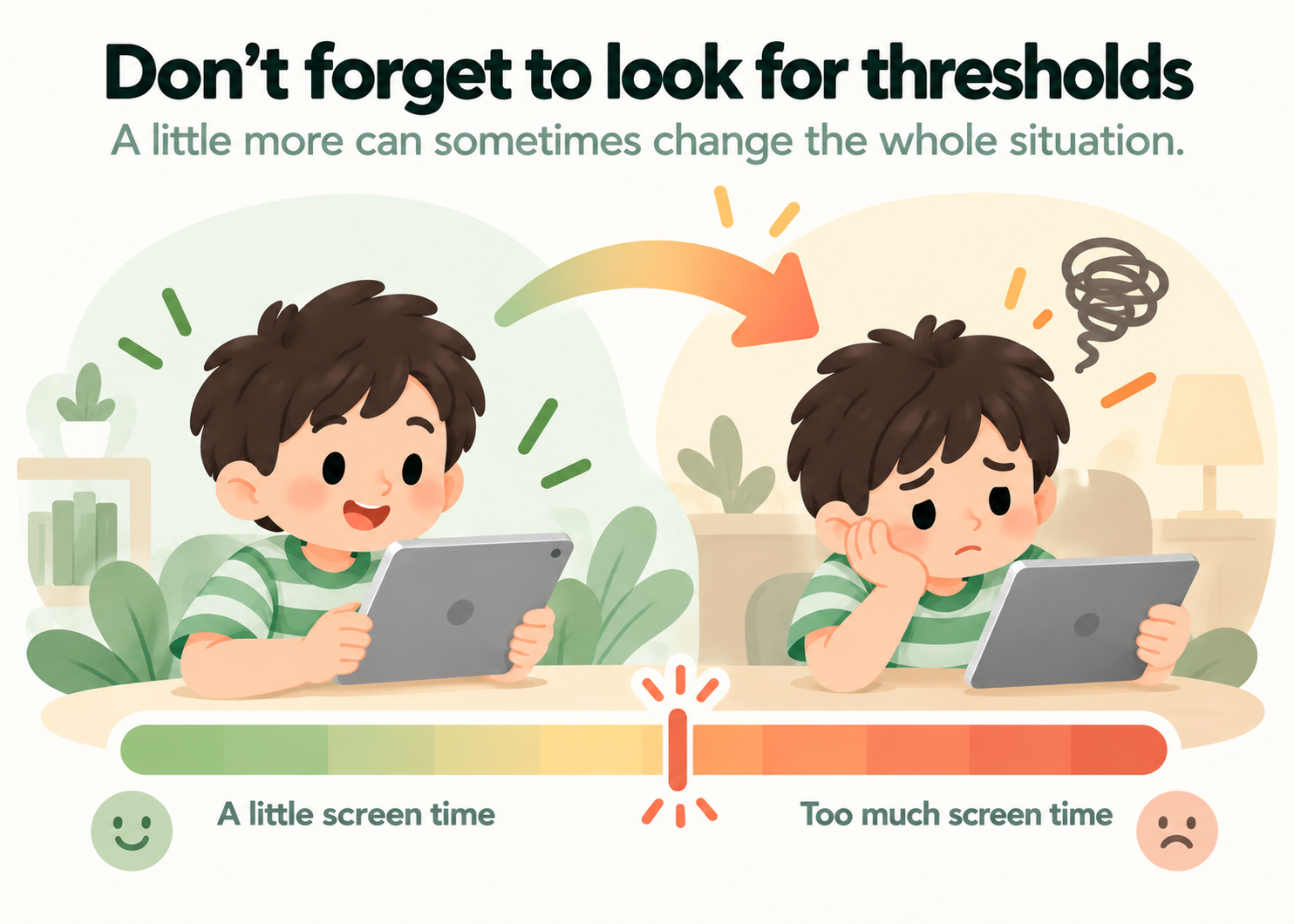
Numbers can help children discover thresholds. “How much” often matters because quantities eventually cross thresholds. Thirty minutes online may be fine. Three hours may produce a different evening. One late night may have little effect. Five consecutive late nights may change mood, attention and functioning. One sarcastic comment may be ignored. Ten may change the relationship. So children can use numbers as data points for Intuition.
“How many nights have you slept badly?”
“How often has this happened with your friend?”
“How long have you felt this way?”
“How much money have you spent this month?”
“How many hours have you actually been playing?”
The point is not obsessive tracking. The point is sometimes making an invisible quantity visible. Numbers can reveal a pattern that Intuition has not yet learned to detect. Then, over Time, Intuition takes over.
Frequently asked questions (FAQ)
Are grades bad for children?
Depends. Grades provide useful information about performance and can help a lot in the learning process. The problem begins when the child or adults interpret the grade as a measure of intelligence, status or Self-worth.
Should parents celebrate good grades?
Better not. You can still enjoy success, but don’t turn every high grade into a reward or celebration and let the process continue naturally – learning and curiosity is what matters.
Can high grades also create pressure?
Yes, if you celebrate them too much and let them become part of the child’s identity. A lower result afterwards can be devastating for the child. Celebrating small wins is a dangerous trap that leads to loss of momentum and thus can turn the child’s attention away from the learning process.
What is the right parents response to a bad grade?
Every grade is only information that should change the next learning decision, not the child’s sense of worth. Don’t attach a bad grade to the child’s identity or capabilities. Analyse together the results and decide what are the next learning steps.
How should parents help children deal with social media?
Teach kids that likes, views and followers measure only a very special form of attention. They do not measure friendship, Love, Truth, Meaning, quality or personal value.
What harms scores can cause to children?
Grades are easy to compare and we should be careful not to start comparing the children instead. You can teach kids to ask what the number measures before attaching Meaning to the comparison.
Should parents reward children for high grades?
No, because rewards can make the grade more important than the learning process. Children can enjoy good results, but they should concentrate further on the learning process.
How can parents stop grades from becoming part of a child’s identity?
A grade should be seen as performance feedback, not intelligence, potential or worth. Discuss and analyse together the results and take actions to achieve better learning.
How should parents teach children about money?
Children should learn to handle money in real life – earning, spending, saving, prices. Money should not become a measure of status or success. You can give your kids some small amount of money and help them manage it in a meaningful and sustainable way.
Is more, bigger, higher always better?
No, not always, because more followers do not mean better friendships, a higher price does not mean better quality, and more hours spent studying do not mean better learning and progress.
Is age a good measure of a child’s maturity?
No, age is not the same as maturity – every child is unique and develops at its own speed, so parents should observe the child’s development and readiness to take responsibility. And if a kid is ready for the next step, you can give it a little bit more Freedom.
What should parents do if a child becomes obsessed with scores, rankings or followers?
Show your Love and help separate the number from the Meaning attached to it. Attention should be directed towards learning, creativity, the outdoors, reality and life – experiencing our great living planet Earth and its people, animals, plants and minerals.
Why should children understand probabilities?
Probabilities are not only needed to see what is possible and how often it will occur, but also to protect you against misleading claims, diverse risks, gambling, betting and bad financial decisions.
Why should you teach children to handle numbers?
A child should use numbers accurately in the Game of Life but stay emotionally free from them in the Game of Self.
Further reading
If you need more details about handling numbers, you can also read the full chapter about numbers. Alternatively, if you want to only overfly it, you may go through the short version of the article. Or just check the summary written in the style of a scientific paper. If you want to feel all the wisdom of the article, don’t forget to have a look at the best quotes as well.
For further topics specifically for parents, teachers or educators, head straight to IGY for Parents.
About this content
The ideas are ours – I Grow Younger knowledge. The pictures and examples have a silicon-based assistant. Your own Intuition has the final word.
It’s in the combination of creating and implementing that AI is still vastly outperformed by humans.
A smart human using AI will probably always be better than just AI left on its own.
The diagrams, the real-life examples and sometimes some other parts of the text are generated by Artificial Intelligence (AI), also called Super Intelligence (SI), that has access to the I Grow Younger knowledge base: the full I Grow Younger content of more than 1000 written pages and more than 50 hours of video and still counting ;).
The underlying concepts, principles, and framework come from I Grow Younger. AI / SI is used to visualize, organize, simplify, illustrate and present them in order to improve the reader experience and support the learning process. No robots were harmed in the making of this article. Don’t hesitate to use all our content for free in the way you want, but remember to mention that it comes from I Grow Younger and do not change it! Have Flows and happy learning!